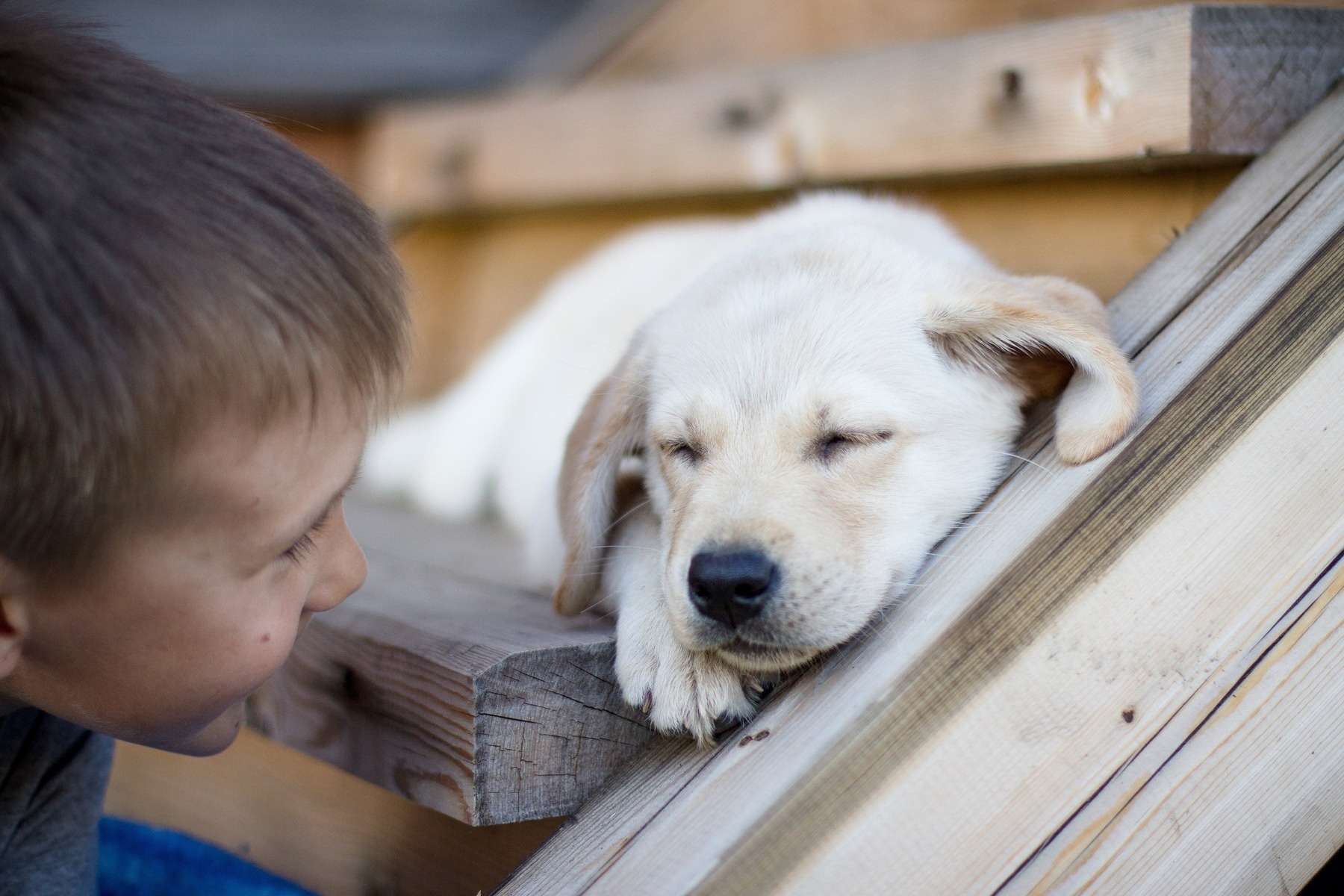
Learning to calm your dog
Teaching your dog to be calm is the best way to make him feel good and to address some of the most common behavioural problems, such as hypersensitivity, excessive motor activity or reactive behaviour, and overly enthusiastic behaviour.
Calming an over-enthusiastic dog
Many people - without realising it - make their dog over-excited because they always interact with him through movement, challenges, jokes, physical play, loud and excited voices, or because they reward the dog every time he gets excited. They regard this state of excitement in the dog as a state of happiness that should be encouraged, or as a request for attention that should be granted; or even as a state of restlessness that should be responded to or reprimanded. Attention is the most coveted reward for the dog: if you unconsciously focus on him when he gets excited, barks, scratches at the door, jumps up at you or behaves in an overly enthusiastic manner, you will inevitably reinforce this behaviour. The typical situation is when you come home, an event that inevitably excites the dog a little: usually, people do not calm him down, but increase his excitement through movement, high-pitched voices, and increased attention. Teaching calmness, on the other hand, is based on strong consistency on the part of the owner in the ability to ignore the dog when he displays overly enthusiastic, hyperactive or overly reactive behaviour, and instead reward the state of calmness, even when you would normally do the opposite. In this way, you can calm an over-enthusiastic dog or calm an over-excited dog.