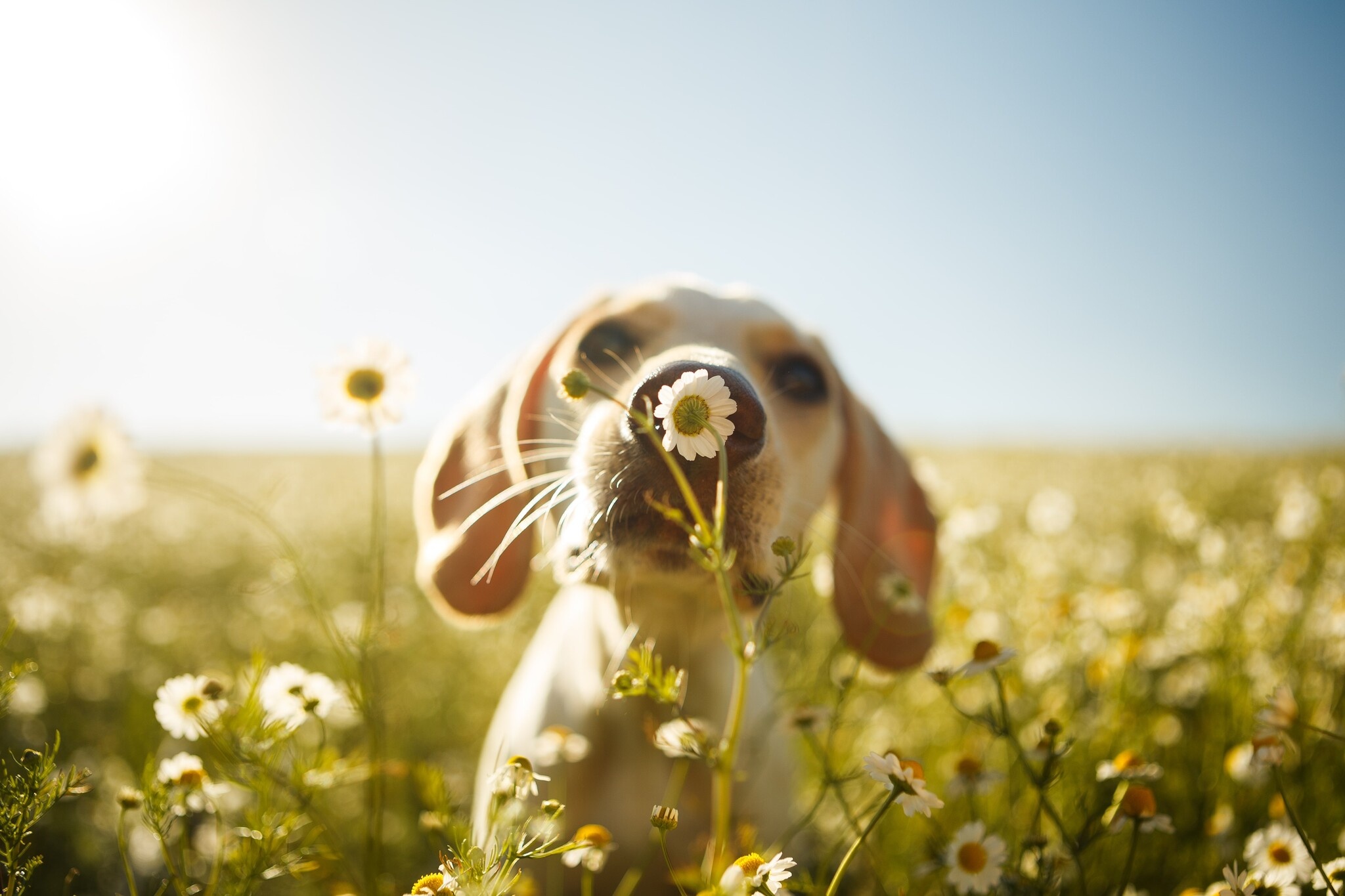
Tips: a shiny coat for your dog
The overall condition of the skin and coat are excellent indicators of the health of our four-legged friends: your pet's coat should be shiny and smooth, not brittle or rough, while the skin should be elastic, clear and never cracked or irregular. The appearance of the coat is certainly influenced by nutrition, but grooming, brushing and daily cleaning are also essential to keep the coat shiny, healthy and strong.
CARE
All animals can benefit from regular brushing and cleaning of their coat. A brush is the best tool for removing hair and dead skin cells, keeping the coat free of dirt, debris and parasites. You should therefore have a wide-toothed comb for long-haired animals, or a special brush for short hair, easily available in specialist shops. There are also special brush gloves that, while brushing, perform an important scalp massage and stimulate circulation. The direction of brushing should be exactly the same as when brushing our hair: from the scalp outwards. In general, long-haired animals should be brushed daily to prevent tangles and knots. Short-haired animals, on the other hand, can be brushed less frequently. Brushing should be done with particular attention to the areas behind the ears, under the armpits and along the back of the legs.
The first stage of grooming is brushing the coat. During this process, it is also important to take a few precautions: never brush against the direction of hair growth, as this can be painful for the animal and ineffective for cleaning; do not brush your animal when it is wet, as the coat will not be cleaned properly; use a brush with metal teeth, known as a cardinator, which removes old dead hairs and quickly cleans the new coat; be careful to avoid causing abrasions.
It is also important to choose cleaning products carefully. A suitable shampoo is one that respects the natural balance of the skin without being too aggressive on the thin protective layer that shields it from external aggressions. Therefore, cleaning products intended for human hygiene should never be used, as the pH values of the skin are very different! The frequency of washing also depends on the length of the coat. Long-haired animals require more thorough care because dirt accumulates more in their coat and they may experience more discomfort, such as itching, tangles and sometimes even dirt particles.
A good frequency for grooming could be as follows:
- long hair: maximum every four weeks
- medium-length hair: maximum every four to six weeks
- short hair: every six to eight weeks at most
If you have any doubts about proper dog hygiene and advice on the best products to use, it is advisable to contact your vet, who can recommend the best solutions.
NUTRITION
Often, simply grooming and cleaning our pet's coat is not enough to ensure that it is thick and shiny. To make the coat look better, it is essential to ensure that your pet has a proper and balanced diet!
A complete food contains all the nutrients necessary to keep their coat shiny and healthy. It is no coincidence that one of the first signs of a health problem in animals is their coat: when an animal is ill, nutrients are first used to feed vital organs, causing the coat to become dull, rough to the touch and start to fall out.
A fully balanced diet includes nutrients from different categories: proteins, fats, vitamins and minerals. Some of the most important nutrients that play a key role in maintaining a shiny coat are:
PROTEINS
The hair root is 90% protein. Therefore, when there is a protein deficiency in the animal's body, its hair becomes weaker, breaks more easily and is more difficult to regrow.
VITAMIN A-E
Vitamin A plays a crucial role in the skin, such as promoting the growth, differentiation and maintenance of epithelial tissue, and has a direct influence on keratinisation; it also influences hair growth via the hair follicles. A vitamin E deficiency can cause alopecia. However, you don't need to worry too much about this, as almost all commercial products contain sufficient amounts.
ZINC
Zinc is very important and is often associated with coat health, as it provides shine and hydration. That is why it is important to add ingredients such as brewer's yeast, liver and eggs to the diet.
FATTY ACIDS
Essential omega-3 and omega-6 fatty acids are essential for keeping the coat shiny and elastic, so the diet should be rich in these substances. Foods containing omega-3 and omega-6 fatty acids, such as fish (salmon, fish oil) or vegetable oils such as linseed and sunflower oil, influence the production of sebum, which essentially has a protective function for the coat and at the same time makes it shinier. Omega-3 fatty acids also aid in the absorption of fat-soluble vitamins (vitamins A-E) and have an anti-inflammatory effect. A deficiency of omega-3 in the body manifests itself in: Dry coat, itchy and dry skin Brittle nails Omega-6 fatty acids fulfil functions that are in some cases opposite to those of omega-3 fatty acids. For example, they can promote inflammation, but they also strengthen the cell membranes of the skin and coat and make them less permeable.
Due to the often antagonistic functions of omega-3 and omega-6, it is important that these substances are introduced in a balanced way in order to benefit from their beneficial functions. We must take this into account when choosing food for our pets.