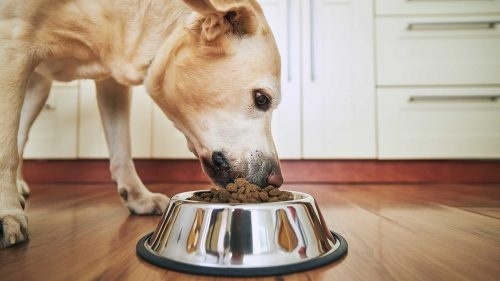
Dogs with a large appetite may exhibit behavioural disorders when it comes to eating. This may be due to competition with other animals they live with, rushing to eat their food, expecting more food to arrive, or simply primitive survival instincts. This is typical natural behaviour for dogs, which stems from their inner pack memories. Although it has been a long time and many generations, dogs of certain breeds continue to exhibit this behaviour.
What are the associated risks for a dog that eats too quickly?
A dog that swallows its food without chewing it thoroughly pushes a large amount of air into the stomach, leading to digestive disorders. This can even be accompanied by occasional vomiting and stomach dilation, which in some breeds can lead to a twisted stomach and bloating.
Getting your dog used to not eating quickly
It is not easy to change the habits of an adult dog. One of the first things you can do is calm the dog down before filling its food bowl by using a calm and reassuring tone of voice. Wait until the dog has calmed down before it sees the food. Try to avoid hustle and bustle and excitement around your dog just before feeding time.
The choice of food type can also sometimes help. Choosing kibble of the right size can slow the dog down, for example. There are also special so-called slow feed bowls for 'over-enthusiastic' dogs that help to slow down the eating pace by encouraging the dog to chew. These bowls have grooves, ridges and obstacles on the bottom of the bowl that force the dog to eat more slowly and thoroughly.
If it proves really difficult to slow the dog down, it is always worth dividing the daily portion into two or three meals. This is especially recommended for large dogs that are prone to stomach twisting.
Finally, two things you should not do
Avoid removing the food bowl while the dog is eating, or showing haste and impatience. It is best to leave the dog alone during mealtimes. Also, consider whether the dog belonged to a pack in the past (for example, if it came from a kennel or breeding centre). These dogs tend to eat quickly because of competition for food in their younger lives. These dogs have experienced pressure to eat and therefore quickly revert to this behaviour in their new home life.